
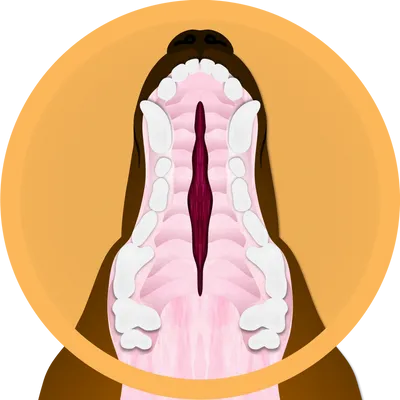
Palatal defects such as cleft palates can be challenging to repair and are sensitive to the time at which the procedure is performed. Pets will often present with a history or clinical signs of difficulty nursing, nasal discharge, sneezing, nasal discharge, coughing, gagging, aspiration pneumonia, and poor weight gain.
Congenital Defects:
- Cleft Lip: This is a defect of the upper lip that may or may not extend into the dental arch and hard palate.
- Cleft Palate: This is a defect along the midline of the hard & soft palate
- Cleft Soft Palate: This is a defect in the midline of the soft palate only. These can be either unilateral (one-sided) or bilateral.
- Soft Palate Hypoplasia: This is the result of a decrease in the normal soft palatal length.
Acquired Defects:
- These are the result of a traumatic event, such as falling from a balcony, being hit by a car, electrical cord injury, gunshot trauma, animal bites, foreign body penetration, and malocclusion of teeth, to name a few.