

Most commonly, pets have a condition called periodontal disease (PD), which is a combination of gingivitis (inflammation and swelling of the gums) and periodontitis (inflammation of the structures that surround the tooth, resulting in bone and tooth loss). When there is end-state periodontal disease, it is best to extract the affected teeth.
Treatment of PD ranges from daily oral hygiene with regular professional dental cleanings provided by a veterinarian, periodontal surgery to clean and/or rehabilitate deep periodontal pockets, to extraction of teeth with end-stage disease. Together, we can determine what treatment options work best for you and your household to prevent and treat PD.
Normal (Healthy) Periodontium

The periodontium refers to the tissues that support and surround the tooth; this includes the gingiva (gums), periodontal ligament, cementum (covering the tooth roots), and alveolar bone.
In a healthy periodontium:
- Gingiva: The gums are firm, pale pink, and tightly adhere to the tooth. There is no inflammation, bleeding, or swelling during routine activities such as brushing, flossing, or periodontal probing.
- Periodontal Ligament: This is a connective tissue that secures the tooth root(s) within the sockets of the jawbone. In a healthy periodontium, the ligament is intact, providing stability and flexibility to the teeth.
- Cementum: The cementum is the covering on the surface of the tooth root(s). It should be smooth and free from irregularities. It serves as a protective layer and attachment surface for the periodontal ligament.
- Alveolar Bone: The bone surrounding the tooth makes the tooth sockets (alveolus). It should be an appropriate height, and it provides support and maintains tooth stability.
Periodontal Pockets
A periodontal pocket describes an abnormal and potentially problematic space or pocket that forms between the gums and the teeth. This pocket develops when the gum tissue pulls away from the tooth surface, creating a gap or space. Periodontal pockets are typically measured with a periodontal probe in millimeters (mm). The depth of the pocket is an important indicator of the health of the gums and supporting structures.
Periodontal pocket formation is often associated with periodontal disease (PD). As PD progresses, the pockets can become deeper, harboring more bacteria, plaque, and dental calculus (tartar), further aggravating periodontal inflammation and PD.
Management of periodontal pockets involves thorough oral hygiene practices, professional dental cleanings, and, in some cases advanced periodontal therapy. Monitoring and addressing periodontal pockets are crucial for preventing the progression of periodontal diseases and maintaining optimal oral health.
3-Walled Periodontal Pockets:
A three-walled periodontal pocket refers to a specific type of periodontal pocket that is surrounded by three sides or walls of tooth-supporting tissues. Teeth with this type of periodontal pocket can be a good candidate for advanced periodontal procedures to preserve or even restore the health of the tooth.

2-Walled Periodontal Pockets:
A two-walled periodontal pocket describes a type of periodontal pocket that is enclosed by two sides or walls of tooth-supporting tissues. Unlike three-walled pockets, the two-walled pockets have a more open side, making them less contained and hard to treat with advanced periodontal procedures.

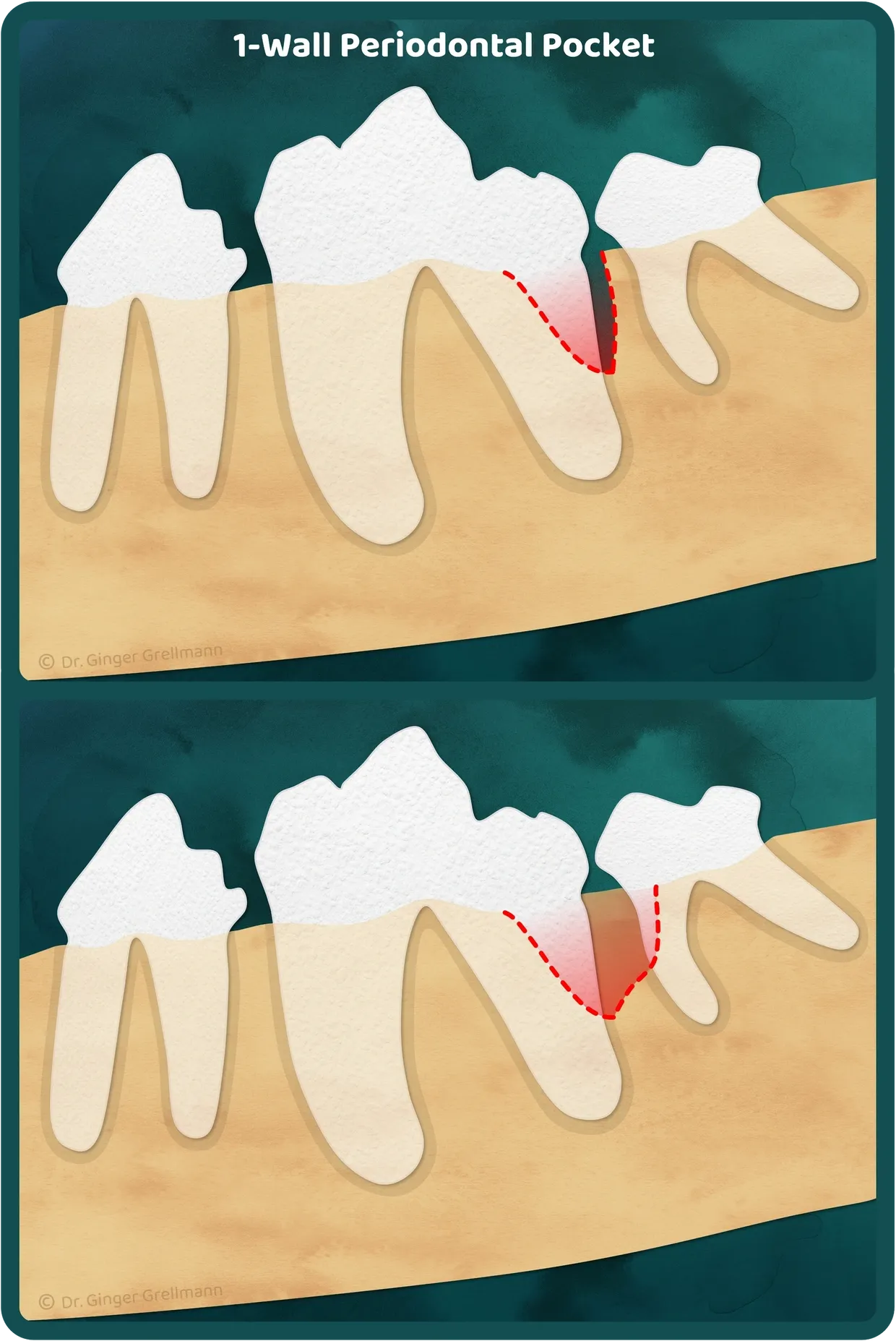
1-Walled Periodontal Pockets:
A one-walled periodontal pocket occurs when a periodontal pocket is enclosed by only one side or wall of tooth-supporting tissues. These teeth are not good candidates for advanced periodontal procedures.
Multiple types of one-walled periodontal pockets can be seen, affecting just one tooth or two teeth, as demonstrated by the images in this section.
Furcation Defects
The furcation of a tooth is the area where the roots of a multi-rooted tooth converge. In teeth with multiple roots, such as molars, the furcation is where these roots diverge from the main body of the tooth, creating a space between them near the gumline.
This anatomical feature holds significance in dental health, as it is a vulnerable site for periodontal disease (PD). As PD advances, it can result in the loss of supporting structures around the tooth, including bone and tissues in the furcation area, potentially compromising the tooth's stability and overall health.
Furcational involvement can pose challenges for both pet owners practicing oral home care and veterinarians performing dental cleanings. The extent of functional involvement will determine the feasibility of advanced periodontal interventions as potential options.
Stage 1 Furcation Defects:
A stage 1 furcation defect occurs when a periodontal probe extends less than halfway beneath the crown (the visible part of the tooth that extends above the gumline) in any direction of a multirooted tooth.

Stage 2 Furcation Defects:
A stage 2 furcation defect exists when a periodontal probe extends greater than halfway under the crown (the visible part of the tooth that extends above the gumline) of a multirooted tooth with attachment loss but not through and through.

Stage 3 Furcation Defects:
A stage 3 furcation defect is observed when a periodontal probe extends under the crown (the visible part of the tooth that extends above the gumline) of a multirooted tooth, through and through from one side of the furcation to the other side.
