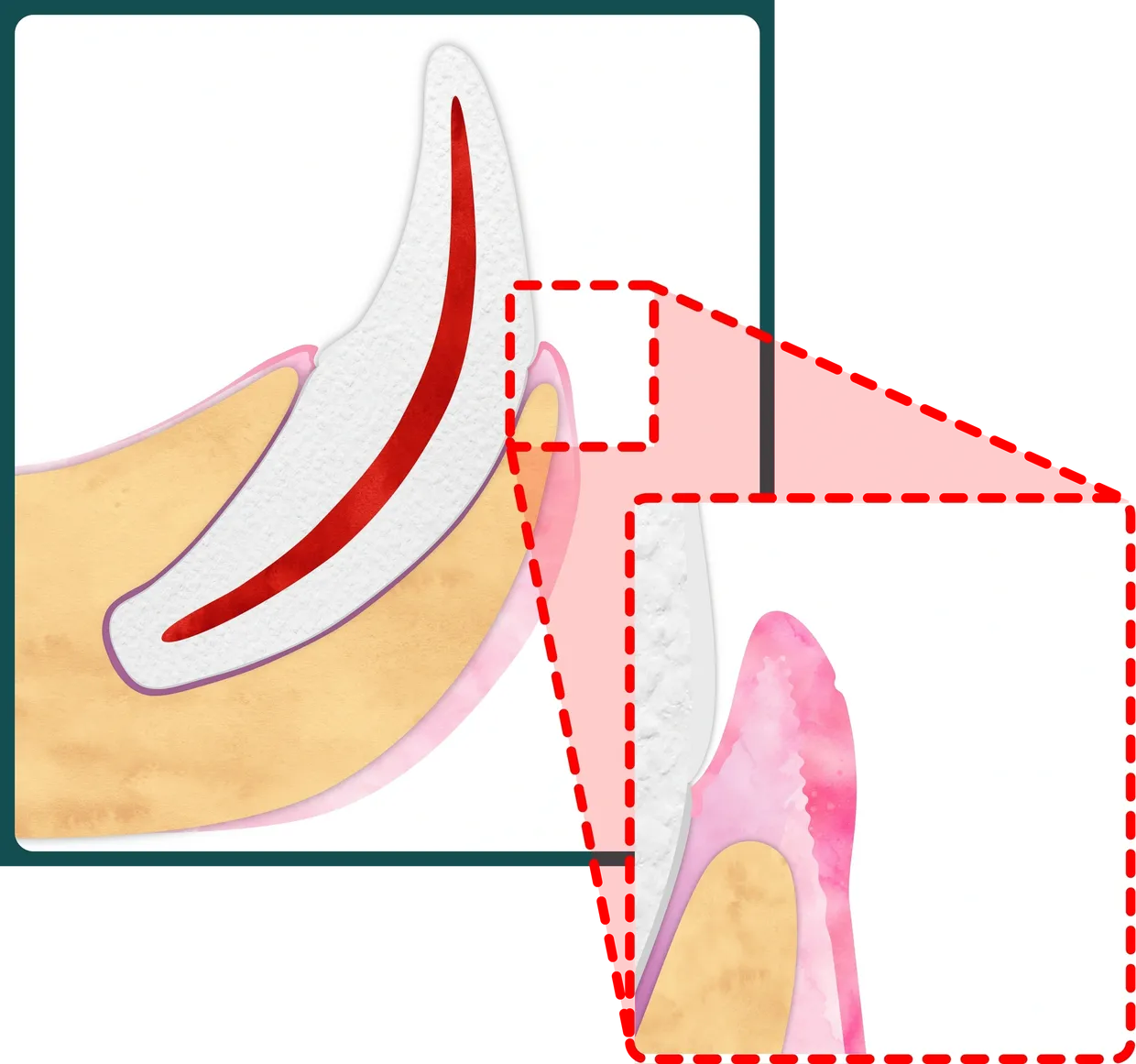
Normal Tooth Anatomy
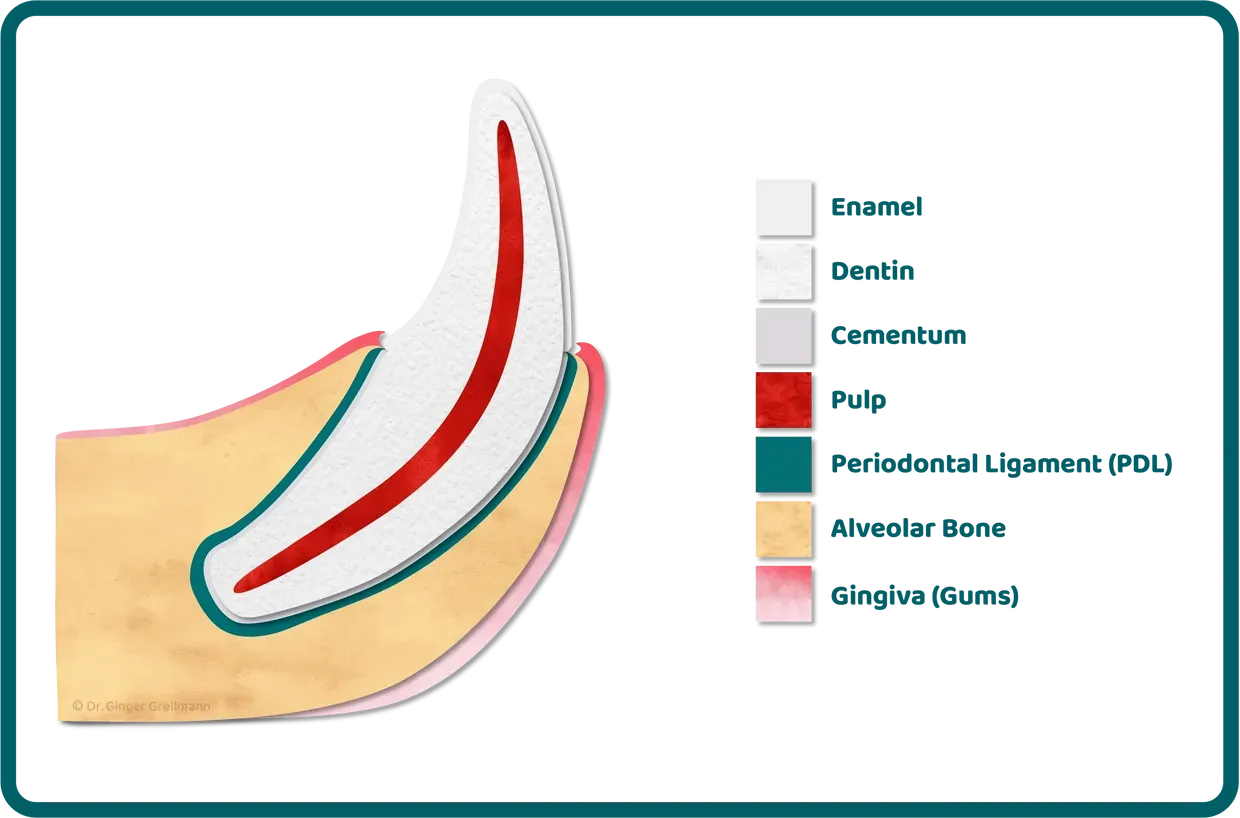
Enamel:
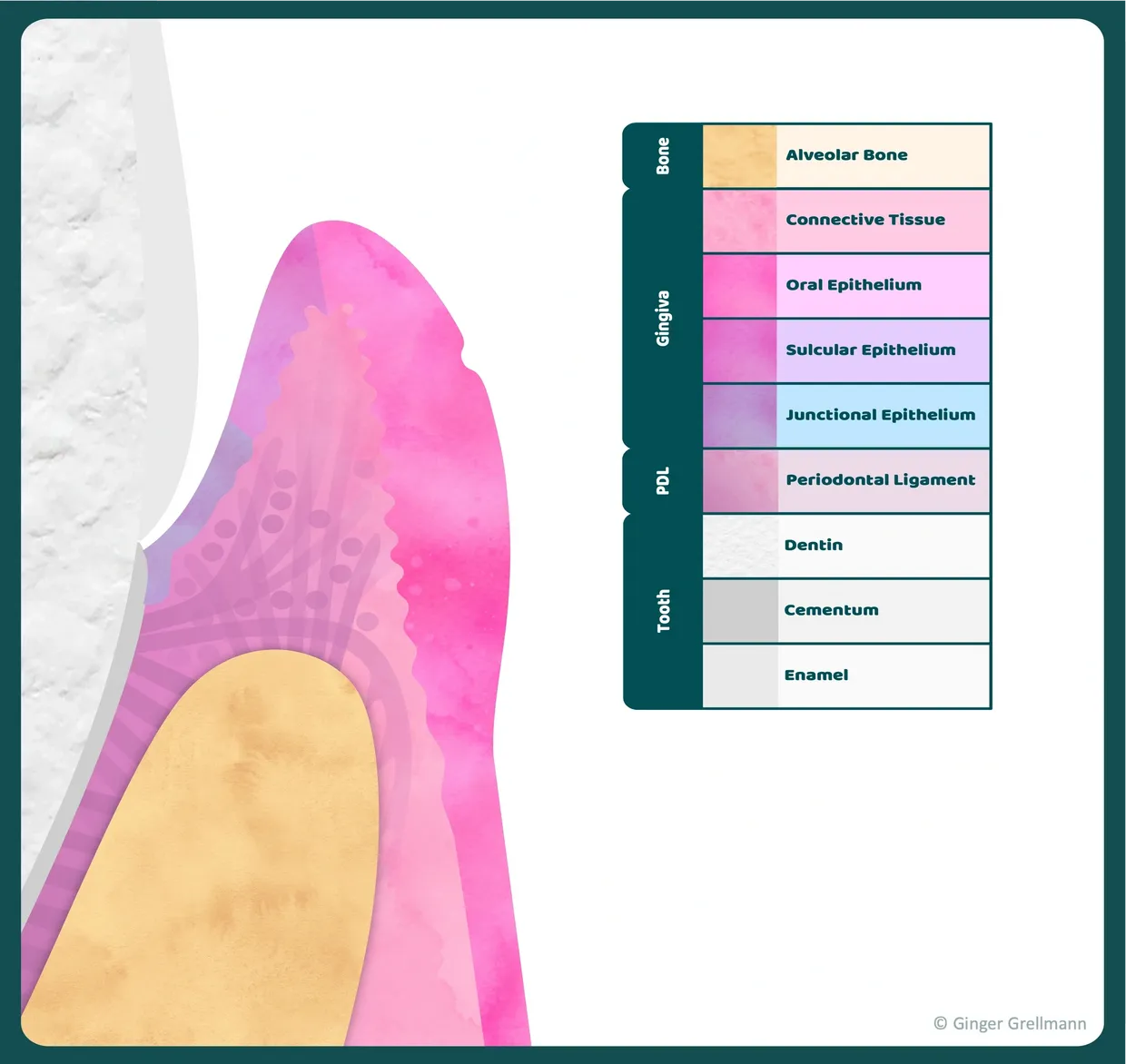
- Enamel is the outermost layer of the tooth, covering the crown.
- It is the hardest and most mineralized substance in the human body, offering protection against wear and decay.
Dentin:
- Dentin is a hard tissue underlying the enamel and comprises the bulk of the tooth structure.
- It is not as hard as enamel but provides strength and support to the tooth.
Cementum:
- Cementum covers the tooth roots and helps anchor the tooth to the jawbone.
- It is not as hard as enamel but is essential for the attachment of the periodontal ligament.
Pulp:
- The pulp is the innermost part of the tooth, housed within the pulp chamber.
- This contains the nerves, blood vessels, and connective tissue that nourishes the tooth and keeps it alive.
Periodontal Ligament:
- This connective tissue secures the tooth roots within the sockets of the jawbone.
- When this ligament is intact, providing stability and flexibility to the tooth.
Alveolar Bone:
- The alveolar bone surrounds and supports the roots of the tooth within the alveolar socket(s).
- It provides stability and structure for the tooth.
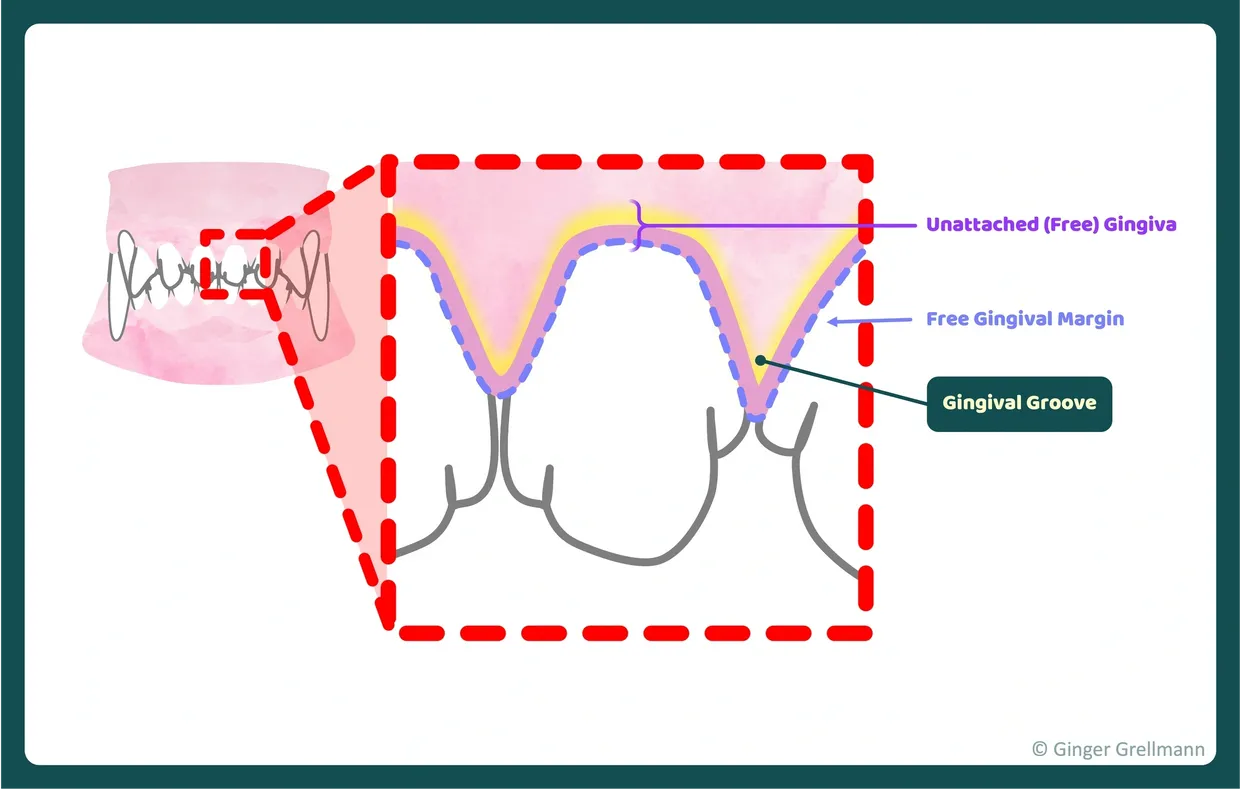
Gingiva (Gums):
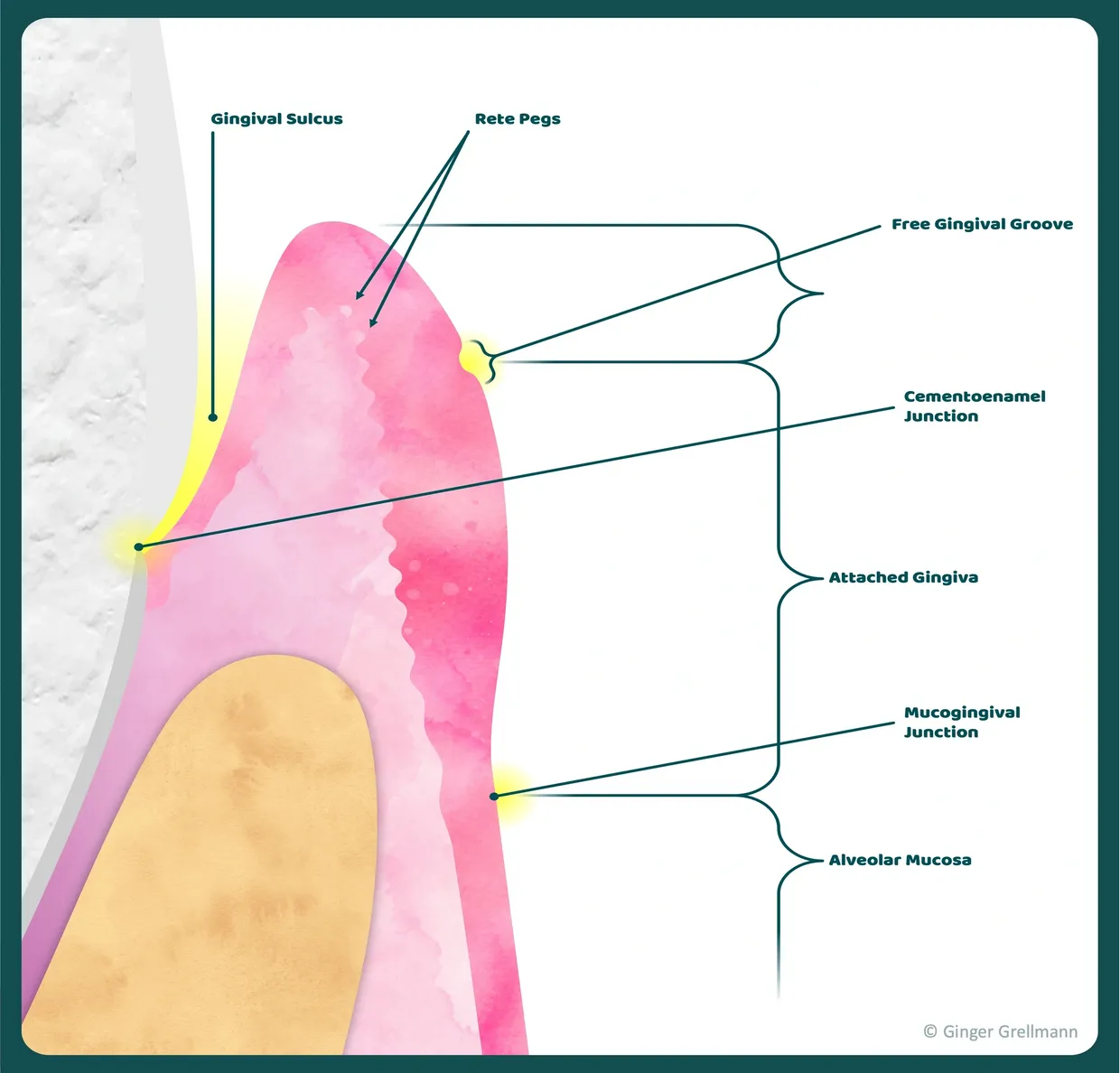
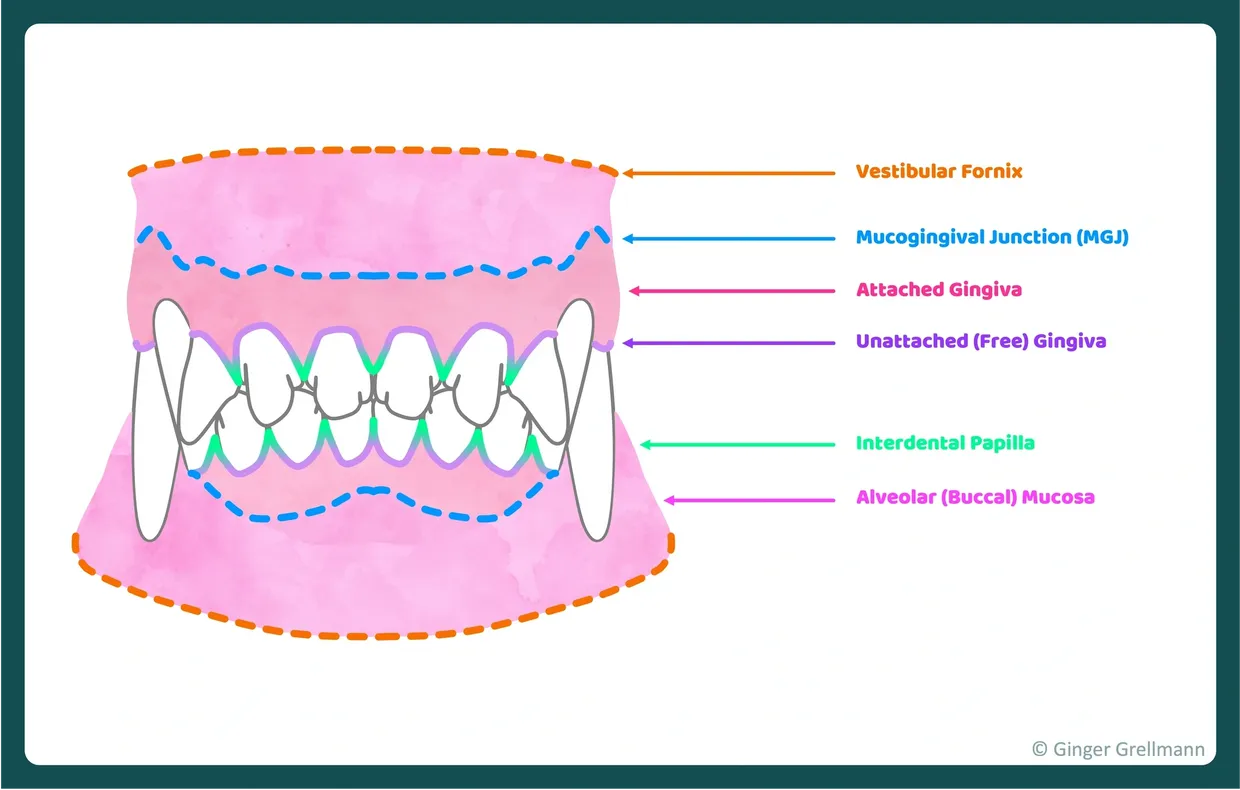
- The gingiva is the soft tissue surrounding the tooth.
- Healthy gums are firm, pale pink, and tightly adhere to the tooth. There should be no inflammation, bleeding, or swelling during routine activities like chewing, brushing, or periodontal probing.

Crown:
- The crown of a tooth is the visible, exposed part of the tooth that is typically covered by enamel.
- This is the portion of the tooth that extends above the gumline and is responsible for functions such as biting and chewing food.
Root:
- The tooth root is the portion of a tooth that is situated below the gumline and embedded in the jawbone.
- The tooth root(s) anchors the tooth, securing it within its socket in the alveolar bone.
- The root is essential for providing stability and support to the tooth, allowing it to withstand the forces generated during biting and chewing.
Normal Oral Anatomy