Our best treatment for dental disease is prevention. When oral hygiene is performed daily at home, we can prevent periodontal disease! However, oral hygiene does not treat dental disease, so once the disease is present, it is important to have a veterinarian provide professional care before starting oral home care.
Periodontal disease is a combination of gingivitis (inflammation and swelling of the gums) and periodontitis (inflammation of the structures that surround the tooth, resulting in bone and tooth loss). The key to prevention lies in reducing the buildup of plaque (bacteria in a biofilm) on the tooth surface, consequently reducing inflammation within the mouth.
Veterinary Oral Health Council (VOHC)
- This is a third-party organization
- Helps to validate if a product or diet meets its label claims to reduce plaque & calculus buildup
- Approved products are evaluated by the VOHC to determine if they meet the criteria for the product’s oral health claims
- VOHC does not perform research themselves, but rather, they review the submitted research for the product
Visit the VOHC website for a current list of approved products.
Active Oral Hygiene
• Pet owner actively participates in plaque removal from the tooth surface
• Active home care is superior for the incisor & canine teeth
Types of Active Oral Home Care:
- Tooth Brushing (Gold Standard)
- Oral Rinses
- Barrier Sealants
Tooth Brushing:
- Daily brushing with a soft‐bristled nylon toothbrush is the most effective
- The soft bristles mechanically remove the plaque biofilm
- Bristles can remove plaque ≤ 1-2 mm deep below the gum line
- Patients with more advanced periodontal disease & patients with periodontal pockets are ≥ 1-2 mm of depth require professional treatment
Pet toothpaste additives are used to:
- Increase palatability (better tasting)
- Enhances normally occurring protective salivary mechanisms
- Provide chemical control of plaque
Do not use human toothpaste:
- Fluoride & detergents in human toothpaste can be toxic to pets when swallowed
- Sodium bicarbonate toothpaste can increase the patients’ sodium levels
When to start toothbrushing:
- Start as soon as possible, between 8-12 weeks old is best
- Your pet does not necessarily need at-home dental care at this age, but at this age, you can familiarize & desensitize them to teeth brushing
- Consider minimizing the brushing activity for your pet’s teeth while they are losing their baby teeth because the mouth can be sore during this time period
- Cats 3-6 months old
- Dogs 3-7 months old
- Then, when all the adult teeth have erupted, you can resume your pet’s normal tooth-brushing regime
Make toothbrushing fun:
- While brushing your pet’s teeth, use a lot of love & praise to build their confidence with you handling their mouth
- If they are nervous & struggle, do not scold them or reprimand them, it can increase the fear, stress, & anxiety
- Be patient with you & your pet, building new habits takes time & practice!
Recommended Toothbrush:
- NIMBY Pediatric Toothbrush
Chlorhexidine Gluconate Oral Rinse:
- Inhibits the development of plaque & the development of periodontal disease
- Can have a bitter taste
- Safe to swallow
- Can be used daily
- Mechanism:
- Disrupts bacterial cell wall lipoproteins
- Precipitates the bacterial cytoplasm
- Binds to the pellicle & has a prolonged effect
Soluble Zinc Salt Oral Rinse:
- Decreases the development of plaque & the development of periodontal disease
- Tasteless
- Safe to swallow
- Can be used daily
- Contains ascorbic acid:
- Supports & induces collagen synthesis
- May improve healing following dental scaling &/or oral surgery
- Recommended Product(s):
- MAXI/GUARD Oral Cleansing Gel
- MAXI/GUARD Oral Cleansing Wipes
Passive Oral Hygiene
• Chew-based homecare products
• Most effective on the carnassial teeth & the surrounding teeth;
pets do not chew with their entire mouth & therefore areas will be missed
Types of Active Oral Home Care:
- Dental Diets
- Dental Chews
Prescription Veterinary Dental Diets:
- Most effective for the tips of the cusps of the chewing teeth
- Chewing can aid in the natural mechanical cleaning of the teeth
- Dental diets control plaque through the fiber arrangement within the kibble
- The kibble is coarse, compressible, & resistant to tearing
- These kibbles are designed to be larger than regular pet food, which increases the amount of chewing
This form of oral hygiene is ineffective at or below the gingival margin. Supragingival plaque & calculus are not inflammatory; therefore, minimal control of gingivitis is gained by calculus control. These diets will not be effective when:
- Chewing teeth are absent
- Occluding teeth are absent
- Pets do not chew their food
NOTE: There is no strong evidence that regular soft diets or hard non-dental diets preferentially lead to greater plaque accumulation or reduction in dogs & cats.
Recommended Product(s):
- Over the Counter Diets:
- Eukanuba Adult Maintenance Diet (Dogs)
- Hill's Science Diet Oral Care
- Prescription Diets:
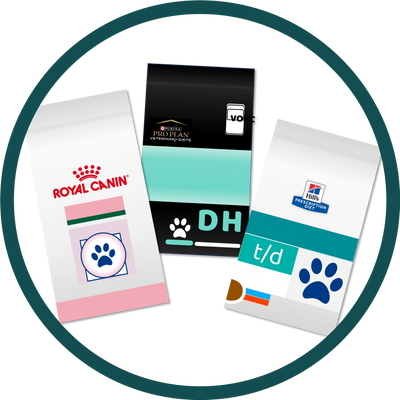
- Hill's Prescription Diet Canine t/d
- Purina Pro Plan Veterinary Diets DH
- Royal Canin Dental Diet
Safe Toys & Chews for the Mouth
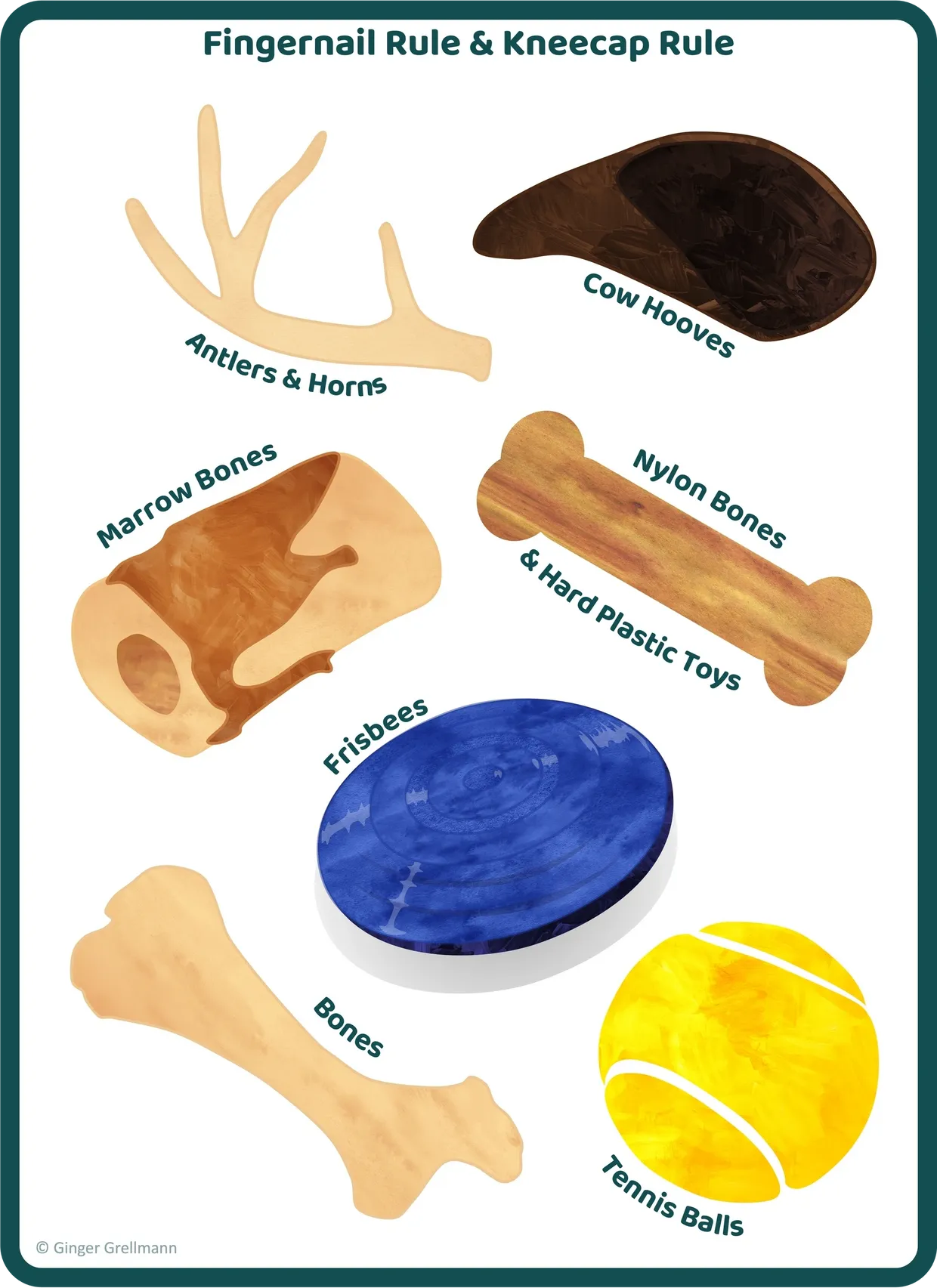
- Rule of Thumb: A good guideline to follow is to not give your pet any toys or treats that you cannot indent with your fingernail because has the potential to break a tooth. This is generally not as big of an issue for cats since they do not chew as aggressively on objects as dogs do.
- The Knee Cap Rule: You should be able to bend or break the toy or chew that you want to give your pet. If you were to hit the item against your knee and it is hard or heavy enough to hurt, then you do not want to let your pet chew on it.
- Unsafe Toys and Treats: For cats and dogs, we do not recommend raw bones, marrow bones, nylon bones, cow hooves, antlers, or other hard chews because of the damage they can cause to the teeth.
Recommended Products & Brands:
- C.E.T. VEGGIEDENT Chews
- Greenies
- Hill’s Science Diet Canine Oral Care Chews
- Milk-Bone Brushing Chews
- OraVet® Dental Hygiene Chews
- ProDen PlaqueOff Dental Treats & Soft Chews
- Purina: Busy HeartyHide Chew, DentaLife, Veterinary Dental Treats
- Tartar Shield Soft Rawhide Chews
- Yummy Combs Treats for Dogs